
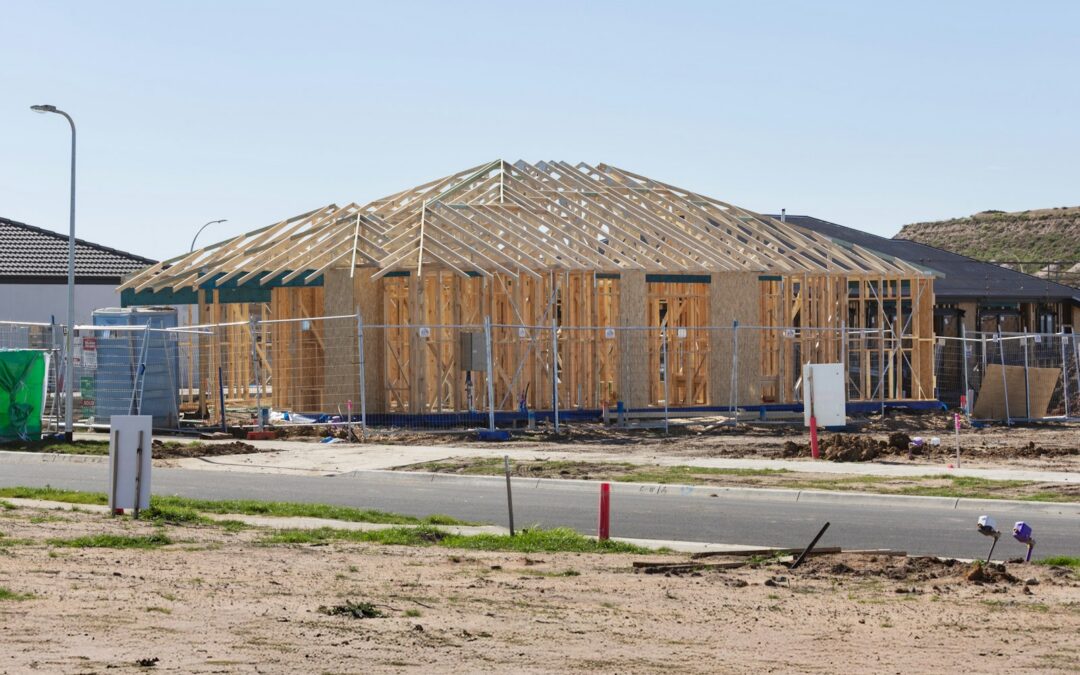
Most California homeowners know their premium to the dollar. Far fewer know what their policy would actually pay if the house had to be rebuilt from the ground up. With wildfire losses, tighter building codes and construction costs that keep climbing, that number matters more than ever, whether you live in the Sacramento suburbs, the Sierra foothills or wine country.
This guide walks through the key coverages on a standard California home policy, starting with the most important one, the dwelling. Then it covers the idea that ties everything together: insuring to value, so your limits keep pace with what it really costs to rebuild today.
The six core coverages on a California home policy
Most homeowners policies (an HO-3 is the most common form) are built from six lettered coverages. Every carrier sets its own defaults, but the structure is the same.
Notice that Coverages B, C and D are usually set as a percentage of Coverage A. If your dwelling limit is too low, every one of those coverages is too low with it. That is why getting the dwelling right comes first.
Coverage A: the dwelling
Coverage A pays to repair or rebuild the structure of your home: the foundation, framing, roof, walls, flooring, cabinets, built-in appliances, plumbing, electrical and HVAC, plus structures attached to the house like an attached garage or deck.
The most important thing to understand is what the dwelling limit should be based on. It is not what you paid for the house, what Zillow says it is worth, or your loan balance. It is what it would cost to rebuild the same home, at today’s labor and material prices, to today’s building codes.
In much of California, the gap runs both ways. In high-priced coastal and Bay Area markets, land is a large share of market value, so a policy based on the sale price can be far more than needed. In the foothills and rural areas, the opposite is common: custom homes on acreage, long driveways, steep lots and limited local contractors can push rebuild costs well above what the home would sell for.
Replacement cost, extended replacement cost and actual cash value
How your dwelling coverage pays out matters as much as the limit itself.
- Actual cash value (ACV) pays replacement cost minus depreciation. On an older roof or home, depreciation can take a big bite. Some FAIR Plan and lower-cost policies default to ACV, so check yours.
- Replacement cost pays to rebuild with materials of like kind and quality, up to your dwelling limit, without deducting for depreciation once you rebuild.
- Extended replacement cost adds a cushion above your limit, typically 20%, 25%, 50% or more, if rebuilding turns out to cost more than expected. After a large wildfire, when every contractor in the region is booked, this cushion is often what closes the gap.
- Guaranteed replacement cost pays the full cost to rebuild regardless of the limit. It is rarely offered in California today.
Insuring to value: why it matters so much in California
“Insuring to value” simply means carrying a dwelling limit that matches the true cost to rebuild your home. After the 2017 and 2018 wildfires, thousands of California families discovered their limits were tens or even hundreds of thousands of dollars short. Many had not updated their coverage in years, and some had bought the cheapest limit available to keep premiums down.
California responded. Under Insurance Code section 10103.4, insurers that offer replacement cost coverage must provide an updated estimate of the cost to rebuild your home at least every other year at renewal, or offer an updated estimate along with a dwelling limit adjusted for local construction cost inflation. That estimate is a starting point, not a guarantee. It is only as accurate as the information behind it, such as square footage, construction type, roof, finishes and upgrades.
When you get that estimate with your renewal, read it. If you have remodeled, added a room, upgraded the kitchen, added solar or replaced the roof, tell your agent so the estimate can be updated.
Keeping pace with inflation and rising rebuild costs
Construction costs do not stand still. Verisk, whose cost data many insurers use for replacement cost estimates, reports that total U.S. reconstruction costs rose about 4.0% from July 2025 to July 2026. Labor led the way at nearly 4.7%, while materials rose about 2%. That follows the much sharper jumps of 2021 and 2022, when lumber and labor shortages pushed costs up at double-digit rates.
Four percent a year may not sound like much, but it compounds. A limit that was right five years ago can leave you well short today.
Two things help you keep up:
- Inflation guard. Many policies automatically raise the dwelling limit each year by a construction cost factor. Check your declarations page to see whether yours does, and by how much.
- A real review. An automatic increase cannot know about your remodel, new roof or added square footage. Only an updated replacement cost estimate can.
Wildfire adds one more factor. After a large fire, demand for contractors, materials and permits spikes across the whole region at once. Rebuild costs in the burn area can jump well beyond normal inflation, which is exactly when extended replacement cost earns its keep.
Ordinance or law: paying to rebuild to today’s California codes
If your home is destroyed, it generally has to be rebuilt to current code, not the code in place when it was built. In California, that can add real cost:
- Wildfire-resistant construction under the California Building Code’s Chapter 7A in designated fire hazard areas, such as ember-resistant vents, ignition-resistant siding and decking, and Class A roofing.
- Fire sprinklers, required in new one- and two-family homes under the California Residential Code.
- Title 24 energy standards, including solar requirements for new single-family homes.
Ordinance or law coverage pays for these code-driven upgrades, which a basic dwelling limit may not fully cover. It is often included at 10% of Coverage A and can usually be increased. For older homes and homes in high fire hazard zones, it is worth a close look. Learn more in our guide to insuring an older California home.
The other coverages: quick tips
- Coverage B, Other Structures: 10% may not be enough if you have a large detached garage, barn, shop, long fencing or retaining walls. Rural and foothill properties often need more. In a declared-disaster total loss, California law lets you apply unused Other Structures benefits toward rebuilding the home.
- Coverage C, Personal Property: Choose replacement cost rather than actual cash value if it is available, and watch the special limits for jewelry, firearms, collectibles and business property. See our guide to policy sub-limits and how to raise them.
- Coverage D, Loss of Use: After a total loss, rebuilding in California often takes two years or more, and rents near a burn area rise fast. Make sure this limit can carry you that long. Read our guide to loss of use, Additional Living Expense and Fair Rental Value.
- Coverage E, Personal Liability: Pools, trampolines, dogs, horses and guests all add exposure. Many homeowners pair a higher liability limit with an umbrella policy.
- Coverage F, Medical Payments: A small, no-fault coverage that can resolve a guest’s minor injury quickly, without a liability claim.
Your deductible also shapes how a claim pays out. See how your deductible works in a California home claim.
What California law adds after a total loss
If your home is destroyed in a declared state of emergency, California law gives you extra protection. You generally have at least 36 months from the first actual cash value payment to collect full replacement cost, with extensions for good cause. You can rebuild on your lot, rebuild elsewhere, or buy an existing home and still apply your replacement cost benefits. Insurers must also advance part of your contents coverage without a full inventory. Our California wildfire insurance claim guide covers these rules step by step.
Those protections help, but none of them can make up for a dwelling limit that was too low to begin with.
Your annual insure-to-value checklist
- Read the replacement cost estimate that comes with your renewal, and correct anything that is wrong.
- Report changes since your last review: remodels, additions, a new roof, solar, upgraded finishes.
- Confirm how the dwelling pays: replacement cost or actual cash value, and whether you have extended replacement cost.
- Check for inflation guard and how much it raised your limit this year.
- Review ordinance or law coverage, especially in a fire hazard zone or for an older home.
- Check Coverages B, C and D against your detached structures, belongings and a realistic two-year rebuild.
- Update your home inventory with photos or video, and store it in the cloud.
If you suspect your home may already be underinsured, start with our guide to California rebuild costs and underinsurance.
We look at your home the way underwriters do: carrier guidelines, ISO verification, mitigation discounts, and the photos carriers and the FAIR Plan require. We will also review whether your dwelling limit reflects what it would really cost to rebuild today.
Book a Walk-ThroughAlready a client and want us to review your limits at renewal? Email team@gold.insure.
Sources
- California Insurance Code section 10103.4, replacement cost estimates (FindLaw)
- Verisk, 360Value Quarterly Reconstruction Cost Analysis, Q3 2026 (PDF)
- United Policyholders, Post-Disaster Insurance Claim Rules in California (2025) (uphelp.org)
Specialists in California’s wildland-urban interface, where homes meet forest, brush and grassland.
Phil Irwin, President, Gold Insurance Solutions. CA License #6000540. General information as of October 2026, not legal advice. Coverage and pricing vary by carrier and home.